
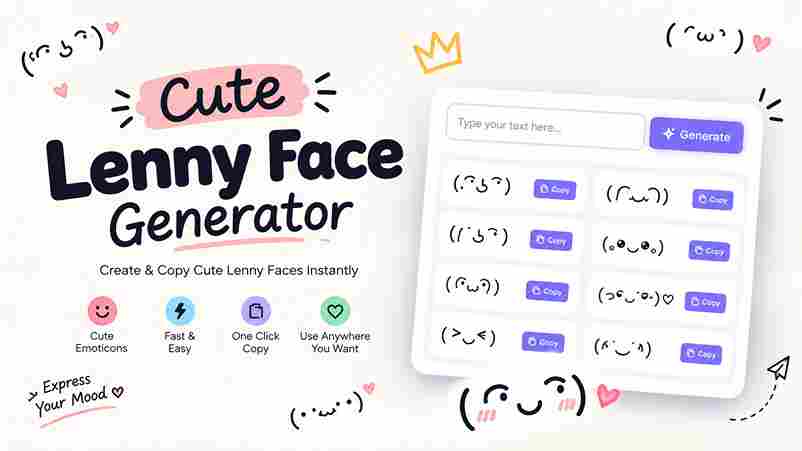
Cute Lenny Face Generator
Find adorable faces, create your own expressions, and copy them anywhere.
Cute faces to copy
Loading faces…✧ Create Your Own Lenny Face
Mix and match eyes, a mouth, and cute decorations.
♡ Add a Face to Your Message
Write a message and place your cute face before or after it.
Tip: These are text-based emoticons. How they look can vary between apps, devices, and fonts. Favorites are saved only for this page session.
An emoticon can change a plain message into a playful moment, and a mischievous-looking face adds personality without an image. This generator helps you explore cute lenny faces using keyboard characters and expressive Unicode characters.
Rather than treating every style as decoration alone, it presents cute emoticons, smiles, and hearts for captions, chats, and replies. Choose a face that matches your mood, then copy it into online conversations for warmth.
Table of Contents
What Is Lenny Face?
A Lenny face is a text-based emoticon built from ordinary characters, often shared in chat rooms to signal a mischievous mood, playful curiosity, or a cheeky reaction without adding a separate image to a conversation.
The classic ( ͡° ͜ʖ ͡°) stays in text messages and social media captions, letting readers infer surprise, happiness, or sadness from context; its meaning shifts with timing, audience, and tone in online exchanges today.
Types / Variations Of Lenny Face
A Lenny face can shift from a big smile to a sly wink, giving messages distinct moods without changing their wording; these small variations help readers signal friendliness, teasing, or playful confidence in online conversations.
For varied chat reactions, (´・ᴗ・`) feels warm, (ಠ﹏ಠ) suggests discomfort, (-‿◦) signals cheeky humor, and ʘ‿ʘ or ⊙▂⊙ gives wide-eyed emphasis; their meanings and mischievousness depend on chat context and shared humor between the people.
How To Use / Copy And Paste
Choose a preset, inspect its face preview, then use the copy button to select the expression. Before sharing, check that the eyes, mouth, and symbols appear correctly before sending it to friends in group chats.
After copying, click the destination text field and paste anywhere the platform accepts text. If a character looks misplaced, return to the generator, select an option, and repeat the process rather than rebuilding faces manually.
Also Read: Symbol Text Generator – Cool Text Instantly!
Usage Examples In Sentences
During texting, someone might write, “That plan is brilliant (°ʖ°),” adding a lenny face to show playful approval without turning a reply into a lengthy explanation during a casual conversation with classmates almost every day.
On a profile, someone can copy and paste (°ʖ°) after “You actually remembered my birthday!” The face adds playfulness, making the message warm while keeping the words readable and the joke clear for group messages.
Generator Features / Stats
Our free online tool lets visitors test cute lenny faces quickly, compare presets, and inspect each result in a live preview before using one-click copy for chats, profiles, or playful comments across everyday conversations easily.
The generator lists 62,208 combinations and 238,260 combinations as scale indicators; treat figures as tool-provided counts, since actual output depends on selected style, settings, and platform rendering behavior rather than guaranteed universal pairings across platforms.
Tips / Etiquette
Read the context first: a playful Lenny face can soften casual chats, but avoid suggestive expressions in a professional setting or serious messages; check your audience before sharing and choose a style that feels respectful.
For accessibility, keep a plain-text alternative nearby, and don’t rely on a face alone to communicate consent, urgency, or important details. Use the copy whole string option only after checking the result displays correctly first.
Unicode Characters Used (Standard Lenny)
Standard Lenny is assembled from Unicode symbols, not installed as a separate typeface. Its recognizable look emerges when punctuation and letters are placed in order, creating expression from keyboard input during everyday exchanges among people.
Because combining marks may attach differently on older software, spacing deserves testing before posting; I usually check the copied expression on the target platform, then adjust gaps if its brows or features appear misaligned visually.
Also Read: Lenny Face meaning and origin
History Of Lenny Face
The familiar Lenny Face appeared on Finnish imageboard Ylilauta on November 18, 2012, during a thread about spam-filter settings; an anonymous user posted it, and others quickly created different styles of the face using characters.
It reached 4chan within hours and later spread through Reddit and other imageboard forums. Repetition helped turn the expression into one of those recognizable memes of popular culture, used for mischievous or suggestive reactions online.
Lenny Face Use Over Time
Over time, the Lenny face moved from niche imageboards into wider online conversation, appearing in 4chan thread discussions before becoming a reusable meme shared by users who wanted playful ambiguity without lengthy explanations in replies.
As platforms changed, users reposted the face across communities; spam filter settings sometimes limited repetition, while 18 November 2012 remains a marker in accounts of its evolving online story as it travelled through later communities.
Why Is The Face Named Lenny?
Despite the name, origin stories do not establish a link to comedian Lenny Bruce. The face’s nickname remains unexplained; online communities adopted “Lenny” after the expression circulated widely, rather than documenting a verified namesake clearly.
Within days, users called it “Lenny Face” and “Le Lenny Face,” but surviving accounts record the label, not its reasoning. This uncertainty matters: a memorable nickname can spread without a documented backstory or confirmed namesake.
Lenny Face: Now You Know
Now you know a Lenny face is more than quirky text decoration: its tiny facial expressions add tone, signal humor, and make ordinary chats feel warmer without needing a separate image or sticker at all.
Choose a cute or winking Lenny style, then copy whole string carefully before sending it; check how each platform displays each Unicode character in chat, because spacing may shift across all devices, depending on platform.
Common Mistakes
One common mistake is treating every cute face as suitable everywhere. Check the context first; excessive emojis can feel spammy, while jokes that work among friends may distract readers in a professional setting or school.
Another mistake is ignoring tone: don’t overuse symbols, especially when a joke may become annoying. Choose expressions; they should build emotional bridges without extra words, not make readers guess your intention in fast-moving group conversations.
Cute Lenny Faces
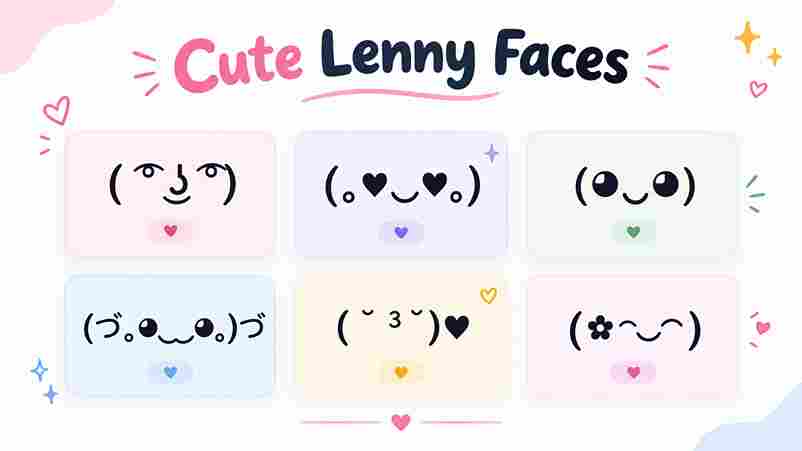
Cute Lenny Faces work best when their adorable look matches the moment: try (≧◡≦) after good news, during friendly teasing, or when a short reply needs warmth without adding another sentence to your ongoing conversation.
That little expression feels special because it spreads a gentle mood without demanding attention; I use faces like this to soften brief replies, celebrate small wins, and keep casual exchanges welcoming and natural for friends.
Popular Lenny Faces
Popular Lenny Faces work best when their expression matches the chat’s mood: a sparkle or pastel look, while a playful uwu face feels gentle, and a chibi design adds warmth without taking over the message.
Friends use these popular styles for greetings, reactions, and profile bios; a small rabbit expression or dreamy aesthetic face can soften a reply, but readability still matters in fast-moving group chats on mobile screens today.
Fully Customizable
Personalize each expression with customizable parts instead of accepting one fixed design. Choose a direction, adjust the details, and create a Lenny face that suits your message, mood, community, or personal style without extra steps.
Keep favorite presets for familiar moods, or mix new symbols into a fresh version. A design-friendly interface makes experimenting simple, helping each creation feel personal while remaining readable and quick to reuse across different chats.
Instant Copy
Instant copy keeps expressive faces ready for chats without rebuilding every symbol. Choose a design, press the copy button, and send it from your clipboard into messages, profiles, or playful replies in seconds across everyday conversations.
On mobile, tap to copy makes sharing feel immediate, while one-click copy suits desktop browsing; check the pasted result before posting because some platforms may change text characters or spacing during display on different devices.
Random Generator
A random generator refreshes the experience when repeated choices feel predictable, offering fresh options without manual searching. I find it useful for testing moods, comparing expressions, and discovering faces outside familiar favorites during chats online.
Tap single click to generate a new creation, then compare each result before posting. A wide variety helps match playful reactions, teasing replies, or quieter conversations across different chats without repeating the same choice twice.
Dance Lenny Face
A dance Lenny face adds movement to plain chat without needing an animation. Pair expressive symbols with music references when celebrating a win, inviting friends, or sharing a playful moment in messages during casual conversations.
For a cleaner result, choose a compact face, then test it in the app where you plan to post. A lively pose works best when the surrounding message stays readable on small mobile screens too.
Lenny Face Vs Kaomoji Vs Emoticon
A Lenny face often signals mischief through familiar facial marks, while kaomoji can express warmth, excitement, or embarrassment with broader character arrangements. Traditional emoticons usually rely on simpler punctuation patterns across everyday online conversations today.
In plain text chats, these styles overlap, but their visual detail changes the tone: Lenny faces feel cheeky, kaomoji often feel expressive, and emoticons communicate emotion with minimal symbols when space or speed matters most.
Conclusion
A cute Lenny face can do more than decorate a message; it helps express subtle emotions, soften teasing, and make everyday conversations feel more personal. Choose a face that matches your meaning, audience, and setting.
Because these designs remain popular across the internet, the best choice is not always the most elaborate. Keep it readable, check how it appears on your device, and let the expression support your words naturally.
What Makes Cute Lenny Faces So Special?
Cute Lenny faces feel special because cuteness is wrapped into expressive symbols that seem universal; everyone can recognize a playful mood quickly, making tiny text reactions feel personal without relying on elaborate wording or images.
How Do Cute Lenny Faces Improve Chats?
Cute Lenny faces soften short messages by adding warmth, humor, and a clear emotional cue. In DMs and texts, they help communicate tone, ease awkward pauses, and make everyday chats feel personal, friendly, and lively.
Why Are Cute Lenny Faces Universal?
Cute Lenny faces travel across languages because text characters express tone without lengthy explanations. In digital communication, playful expressions feel familiar across cultures, helping friends share warmth, humor, and kindness when ordinary words feel limited.
What Are Examples Of Cute Lenny Faces?
Cute examples range from kawaii expressions and a cat face to stars, blush, and love. Try wink for playful replies, or a dog face when chats need a softer, friendlier mood with a little personality.
How Do Cute Lenny Faces Affect Mood?
Cute symbols may lift a bad mood by adding playfulness to a plain message. A shy or nervous person can signal friendliness with just one symbol, without explaining every feeling to someone they trust online.