
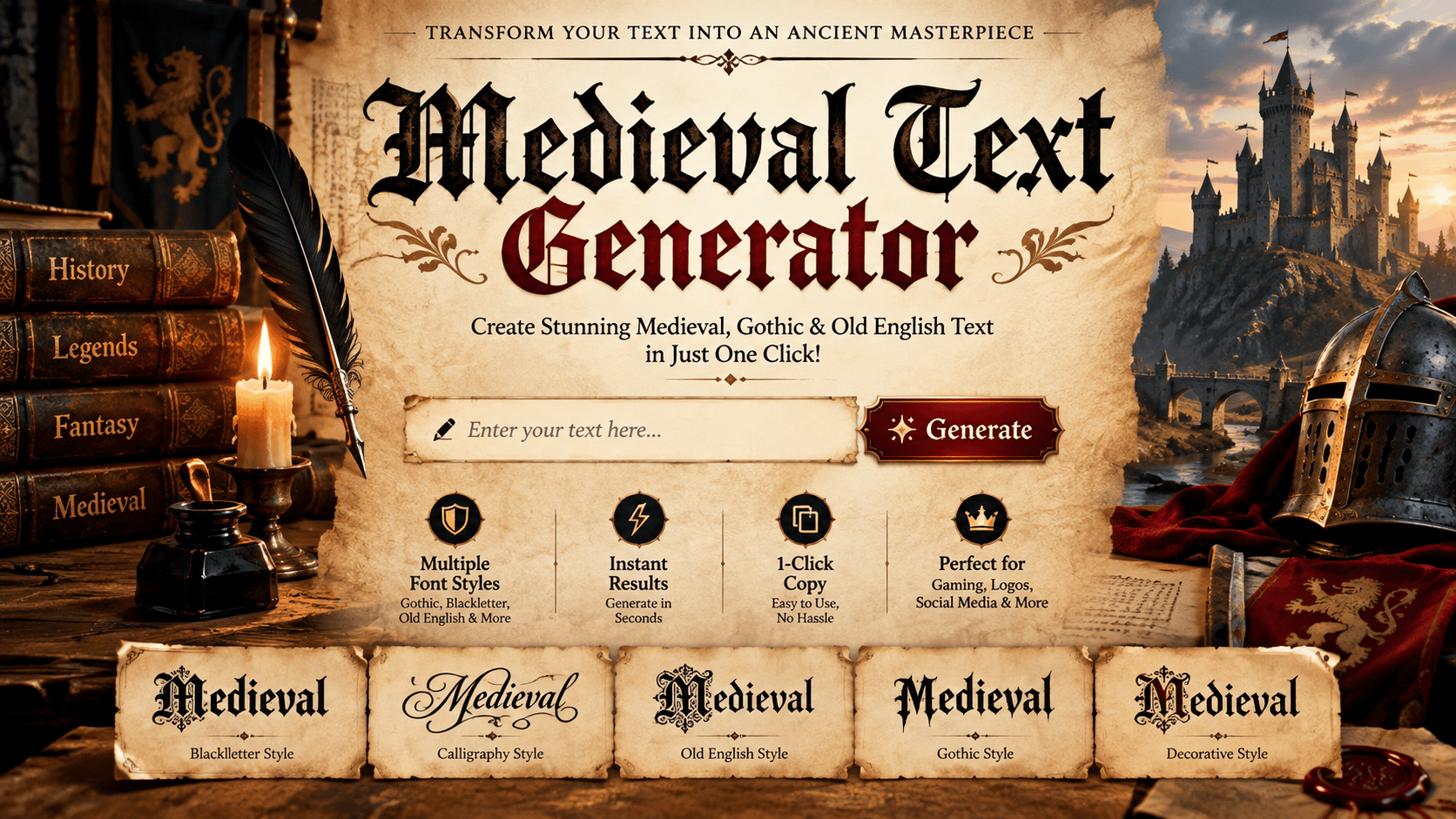
⚔️ Medieval Text Generator
Convert normal text into Old English, Gothic, Fraktur, and Runic Unicode fonts.
Medieval gothic font generator brings manuscript culture into modern written communication, letting creators explore blackletter typefaces shaped by European history. These tools recreate letterforms with angular strokes and dense texture, giving ordinary words medieval identity.
Beyond appearance, a medieval gothic font generator supports fantasy video games, DnD campaign map work, and dark fantasy projects. In practice, digital Unicode characters help creators preserve historical authenticity through atmospheric immersion and visual tradition.
Table of Contents
What Is Medieval Gothic Font?
A medieval gothic font emerged through blackletter typefaces associated with 12th-century European manuscript culture, where broken strokes created dense text texture and compact forms that later influenced how medieval lettering appears in digital contexts today.
In my design work, I use decorative variants when plain historical reconstruction feels too rigid; the goal is creative work that preserves period atmosphere while adapting spacing, contrast, and character shapes for readable contemporary projects.
Best Use Cases For Medieval Gothic Font
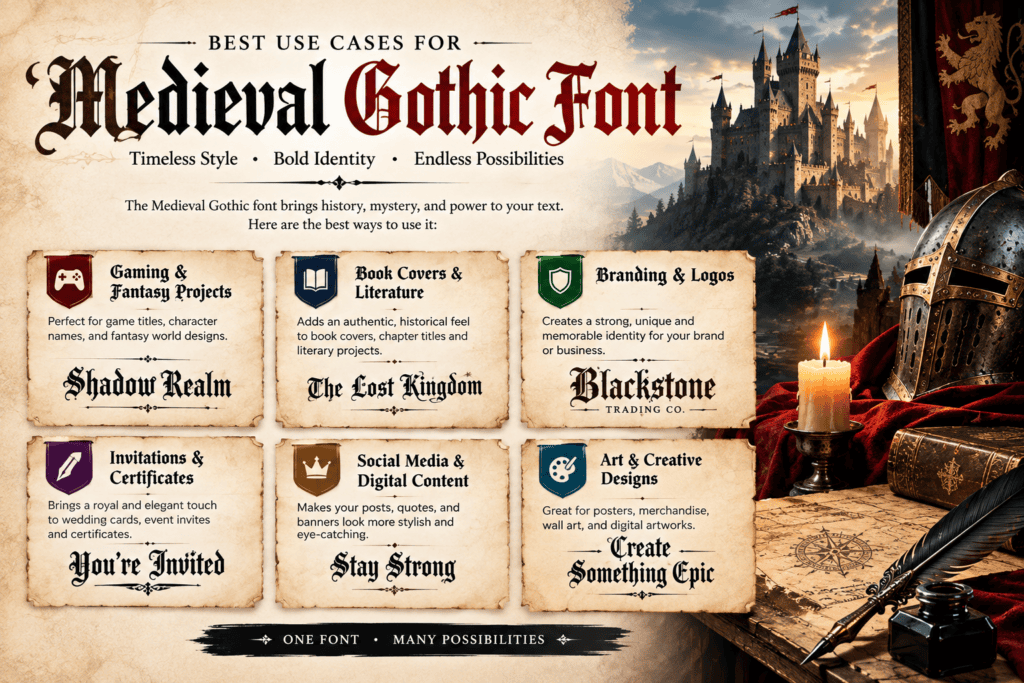
For practical projects, tabletop RPG culture, fantasy games, and historical reenactment benefit from medieval aesthetics revival because the lettering quickly establishes period, character, and setting before viewers read the finer visual details on each screen.
I also use it for LARP, Book cover design, Event design, and fantasy UI when a project needs Maximum ceremonial drama; at smaller sizes, careful testing preserves clarity without weakening authenticity across devices and contexts.
Also Read: Signature Font Generator – Turn Your Name Into a Stylish Signature
Categories
Useful categories range from DnD and Tabletop RPG campaign materials to Fantasy Game Design, where immersive UI text, item names, lore entries, and loading screens create a consistent identity for users across creative projects online.
Another category covers Fantasy Maps and World-Building, including continents, cities, mountain ranges, and ancient ruins. I also use these styles for LARP, Cosplay, and event invitations when a period-appropriate design context matters most in practice.
Tips For Better
For better medieval text, I first test the target context with Fraktur letterforms and a real-time preview. Keep short runs for readability, especially when ornate letterforms or visual complexity compete with surrounding copy during design.
For headings and names, compare visual weight across Gothic Bold and Royal Gothic; do not assume ornate output is automatically better. Check mobile rendering on the target platform, because Unicode characters can expose internal detail.
Where To Use Medieval Text Generator
I use text generators for fantasy world-building, DnD campaigns, RPG game design, and character sheets, where medieval character styling quickly establishes tone. They also suit guild, kingdom, and dungeon maps, especially when visual identity matters.
For design, these work well on medieval banquet invitations, Indie game studios, logos, marketing materials, and fantasy apps. Use decorative variants selectively, because streamlined modern legibility can matter more than period authenticity when readers scan.
Similar Medieval Gothic Fonts — Compare Styles
Similar styles become easier to distinguish when context enters the decision. ceremonial weight suits formal headings, while world-building texture supports quest scrolls and homebrew rulebooks where ornament should reinforce setting rather than dominate reading comfortably.
For real projects, I compare medieval fantasy games, hand-drawn maps, and digital fantasy maps separately, because scale changes spacing and detail. genre credibility and manuscript energy matter most when style must feel intentional online today.
Also Read: AI Text Generator
Conclusion
Medieval text gains lasting value when historically grounded choices meet practical design needs. I find that Medieval charm works best when structure remains clear, allowing online creators today to present distinctive lettering without sacrificing usability.
A strong generator can deliver ornate output for titles while respecting a readability constraint. Used thoughtfully, styled letters become a visual community marker, supporting fantasy worlds, profiles, games, and atmospheric digital publishing across diverse contexts.
What Is A Medieval Gothic Font?
Medieval Gothic lettering gained its distinctive identity through trained scribes, whose broad-nibbed quill encouraged broken strokes; textura and elaborate serifs added density, while later printed communication carried the style across Europe with remarkable visual authority.
How Is Medieval Gothic Font Different From Regular Gothic Fonts?
Medieval Gothic fonts emphasize historical authenticity, angular strokes, and cross separators, while regular Gothic fonts can be broader and less period-specific. Fraktur often adds denser ornament, whereas Medieval styles retain manuscript-era personality for period character.
Is Medieval Gothic Font Good For DnD?
Yes, DnD benefits from a Medieval Gothic font when campaign materials need a strong tone. In my experience, it suits RPG projects, especially fantasy game design, while medieval-themed events gain atmosphere while maintaining clear presentation.
Can I Use Medieval Gothic Font For Game Design?
Yes, especially when building medieval-themed game UI for a fantasy setting. I have found that blackletter adds tone quickly, while carefully chosen letterforms keep menus readable and reinforce the game’s identity without clutter across screens.
What Are Cross Separators In Medieval Gothic Font?
Cross separators add a ceremonial pause between sections, echoing illuminated manuscript practice where scribes used cross marks for chapter divisions and points of emphasis. In medieval Europe, this detail strengthens modern layouts without clutter today.