
Embroidery Font Generator – Create Embroidery Text
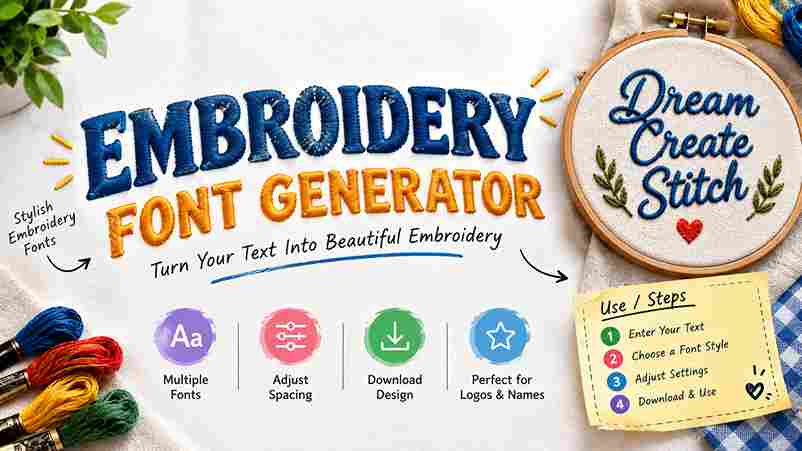
Embroidery Font Generator Create custom embroidery-style text with different fonts, stitch patterns, thread colors, spacing, density and backgrounds. Download your design as a PNG. Your Text 0 characters EMBROIDERY Font Style Bold BlockStrong ImpactClassic SerifRounded ModernTypewriterScriptHandwrittenElegantWestern Stitch Style Satin StitchDense Fill StitchRunning StitchCross Stitch Font Size 100px Letter Spacing 2px Stitch Density 5 Stitch Angle 35° Line Spacing 1.2× Outline Width 2px Thread Color #B8860B Outline Color #6D4C09 Background Color #FFFFFF Design Options Transparent Background Thread Highlight Soft Shadow Auto Fit Text Generate Design Random Style Copy Text Download PNG Reset Embroidery Preview Ready to generate This tool creates a visual embroidery-style text design for digital use and PNG export. It does not create professional machine embroidery files such as DST, PES, EXP, or JEF. An embroidery font generator turns typed lettering into a visual embroidery concept, letting designers test font style, letter spacing, word spacing, and preview details before committing stitches to fabric, products, or apparel across common projects. From my workflow, useful tools balance readable letters with practical production choices, using millimeters, a stitch path, and a machine-ready embroidery file, so names, monograms, uniforms, caps, and patches remain clear after sewing on garments. Embroidery Font Generator Use / Steps Start by typing your text into the embroidery font field, choose a font, adjust letter spacing and word spacing, then review the layout before pressing the Generate button to create a preview before stitching begins. Next, select colors and a suitable size, check stitch density, confirm background color, and use transparent PNG or PES output when needed. Finally, use image download to save the design and test it before sewing. Features Useful features become obvious when the generator delivers a realistic embroidery effect, preview before sewing, fixed physical size, and sharp letters, helping designers judge scale, spacing, and thread behavior before production starts with confidence today. For practical workflows, browser access, free creation, no upload, no login, and support across tablet, phone, and any device make customization faster, while a machine-ready embroidery file keeps output convenient for everyday stitching tasks too. Also Read: Stencil Font Generator Benefits / Who It’s For From my workflow, embroidery text is most useful for e-commerce operators who need personalizing without manual tracing. Shoppers can preview names on caps, bags, and towels, while uniforms gain consistent lettering for repeat orders reliably. The practical benefit extends to gifts and branding: initials and monograms create a personal touch, while a short word keeps stitching manageable. I’ve found these choices especially effective when matching products, audiences, and production limits. Types Of Embroidery Font Styles Embroidery styles differ by stitch behavior, not simply appearance. Satin columns, running-stitch outline, fills, letter outline, and single-color running stitch produce different lettering effects, while stitch coordinates influence spacing, density, and fabric coverage on products. Some styles prioritize detail; thin letters suit smaller sizes, while bold letters and filled letters demand hooping and firm stabilizer support. I compare font previews before personalization, checking alignment problems, puckering, and final stitch-out clarity. Categories Embroidery font categories become clearer when organized by stitch behavior rather than appearance alone. I usually separate script, block, monogram, and varsity lettering first, then test density, spacing, and thread direction on actual fabric carefully. For decorative projects, cursive, chain stitch, cross stitch, 3D puff, and needlepoint styles each require different digitizing decisions. In practice, choosing the right style depends on fabric weight, hoop limits, readability, and stitch stability overall. Where To Use Embroidery Font Generator An embroidery font generator fits neatly into product personalization, especially for aprons, towels, bags, and labels. I use it when a client needs names, initials, or team branding previewed before production with better placement decisions. It also works for website logo projects, boutique monogram pieces, and repeat label runs. For machine work, exporting a PES or DST file helps connect digital lettering with practical stitching requirements before sending work onward. Embroidery File Formats Explained Choosing a file format is less about decoration and more about whether the embroidery software can prepare a dependable stitch plan for target commercial machines. DST remains the most widely supported option across production environments. For home machines, manufacturers may prefer a native format, so I check the machine brand before exporting. Pfaff, Babylock, Janome, Brother, Bernina, and Ricoma setups can differ in acceptable formats, settings, and transfer methods significantly. Conclusion After testing different workflows, I find digitizing quality matters more than decorative effects. A strong embroidery font generator turns typed words into clean, machine-ready output, balancing spacing, needle movement, and readable detail for consistent results. From production work, I have learned that preview accuracy builds confidence before stitching begins. Choosing suitable fonts, stabilizer, and export settings helps preserve the intended appearance across garments, logos, gifts, and professional orders with confidence.