
Reverse Text Generator – Create Backwards Text
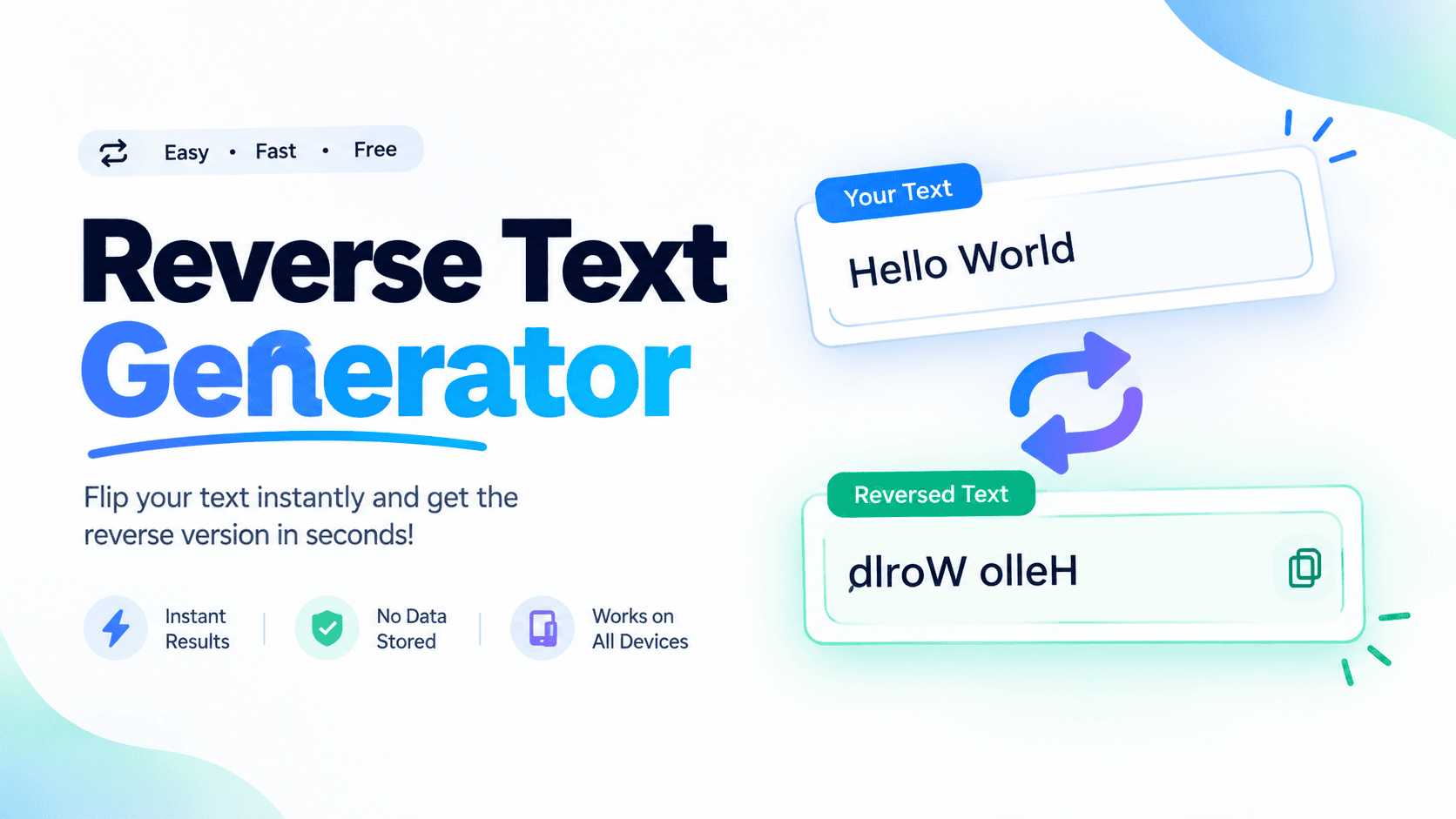
Reverse Text Generator Reverse Text Reverse Wording Reverse Letters Upside Down Copy Text Clear 0 characters | 0 words A reverse text generator is useful when ordinary wording feels predictable. Enter a message, test a transformation, and inspect the result before sharing. I often use it for playful posts, puzzles, and quick typography experiments. The practical appeal is simple: paste text into the input field, reverse characters, and copy the changed text. A tool works instantly, keeps process clear, and lets users explore mirrored text effects or backwards text. How To Use / How It Works To use a backwards text generator, enter normal text, choose a Reverse Text mode, and submit it. The tool changes character order automatically, producing output that can be copied anywhere without manually flipping letters easily. In practice, I check the input first, then compare the reversed text visually for accurate results. For large text blocks, transformation happens quickly, while Unicode characters preserve supported symbols across devices consistently online for sharing. Why Use This Tool / Features I use this tool when ordinary text feels too predictable: reverse text adds playful variation, while flipped or upside-down text can create eye-catching posts for Twitter, Instagram, and Facebook without extra software in seconds reliably. Beyond entertainment, I find security data encoding, educational puzzles, and creative typography useful because transformation quickly changes readable input into unfamiliar forms, encouraging students, creators, and gamers to figure out patterns without slowing the workflow. Also Read: Typewriter Font Generator – Create Vintage Text Online Examples Of Backwards Text A practical example is using backwards letters in Instagram bios, where mirrored characters create a visual break without another app. I have found this especially useful for playful identity details and quick profile experiments online. For practice, writers can try mirror writing practice with reference text, then compare results with handwriting practice exercises. Leonardo da Vinci-style notebook entries and mirror image art offer familiar examples for exploring reversed forms visually. Keep Your Data Safe Keeping data private matters when a browser tool handles personal text. I prefer processing reversed text locally or using a trusted website, avoiding unnecessary uploads, saved drafts, registration, or download files unless genuinely needed online. For extra caution, remove names, passwords, email addresses, and confidential project details before transformation. Check the browser extension, pasted text, output field, and copy result, then clear the page when work is finished securely afterward. Unicode Character Substitution Table A Unicode mappings table makes substitution practical because each original character can correspond to a visual counterpart. For mirrored Unicode equivalents, I check supported letters first, then verify how devices render symbols before copying transformed text. A useful table groups English letters, uppercase, lowercase, numbers, and common punctuation separately. In practice, no Unicode equivalents should be flagged clearly, while remain unchanged characters are preserved rather than forced into inaccurate visual substitutions. Also Read: World Cup 2026 Font Generator – Create Soccer Text Skip The Copy-Paste On Social Media / Browser Extension Promo Use the browser to reverse text before sharing, so social media platforms receive ready-to-paste wording without repetitive edits. I often prepare captions in advance, then copy and paste the transformed result directly into posts quickly. For quicker workflows, a browser extension can keep the text reverser close while drafting Twitter, Instagram, or Facebook updates. This reduces switching between tabs, preserves creative momentum, and makes paste anywhere effortless for busy creators. Also Read: Font Tools & Cool Stuff Conclusion With experience, I find a reverse text generator is strongest when transformation modes are clear, reversing text remains predictable, and text puzzles feel immediate; results should be readable enough to verify before sharing online publicly. A workflow lets readers select transformation mode, inspect the output field, then copy or download transformed wording. A backwards text generator also helps test reversed text, compare style, and catch output before publication or messaging.